
What a cleanroom is, what it’s for, and which sectors use it
Have you ever wondered how vaccines, microchips or medicines are manufactured without a single particle contaminating them? The answer lies in cleanrooms. A cleanroom is a space designed to maintain a controlled, contaminant-free environment that complies with strict quality and safety regulations. Its main function is to ensure that manufacturing, research or healthcare processes take place under optimal conditions. To achieve this, it’s essential to have cleanroom engineering services that guarantee proper design, execution and control from the start of the project.
What is a cleanroom?
A cleanroom is a work area where the concentration of airborne particles is rigorously controlled, along with other key parameters such as temperature, humidity, pressure and airflow. The goal is simple: protect processes from external contamination.
The term “cleanroom” covers a wide range of classifications — the higher-grade, most demanding classes are sometimes referred to separately in Spanish-speaking markets, but in English, “cleanroom” is the standard term used across all classification levels.
Main characteristics of a cleanroom
To maintain a contaminant-free environment, cleanrooms have specific characteristics:
Materials and finishes: Construction materials are crucial. Cleanroom finishes include stainless steel or phenolic resin, which are easy to clean and prevent contaminant buildup.
Particle and contamination control: The room’s design is aimed at minimizing the presence of particles and microorganisms that could affect sensitive processes.
Air filtration systems (HEPA and ULPA): Advanced filtration systems are used, such as HEPA and ULPA filters, capable of capturing microscopic particles and maintaining the purity of the environment.
Environmental control: Specialized HVAC systems guarantee a stable environment, regulating temperature, humidity and pressure conditions to comply with applicable regulations.
Cleanroom classification
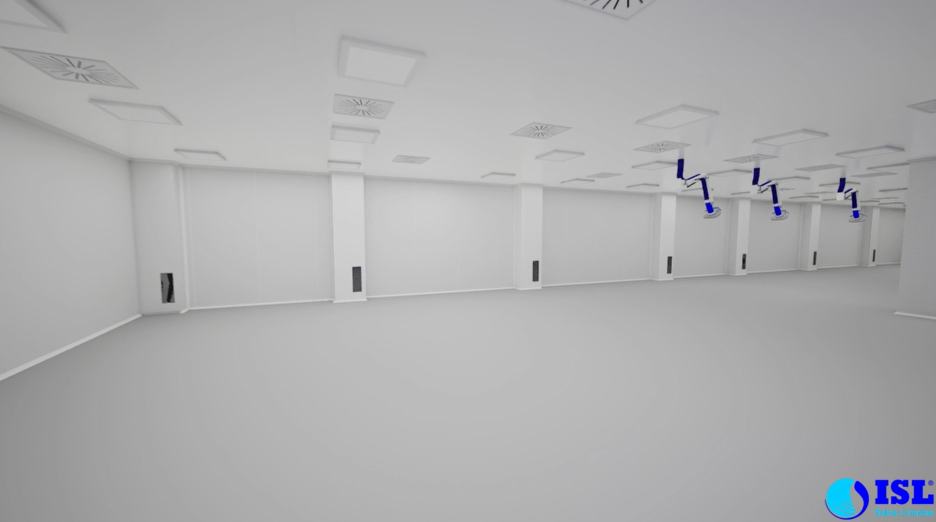
Cleanrooms are classified according to the ISO 14644 standard, which sets particle concentration limits according to different classes (from ISO 1 to ISO 9). The lower the number, the higher the purity level.
- ISO 5: Used in highly critical pharmaceutical processes or microchip manufacturing.
- ISO 7: Common in laboratories and the cosmetic industry.
- ISO 8: Used in sectors where control is less demanding, such as the food industry or general assembly.
For more information, you can check our article on cleanroom classification according to ISO 14644.
What is a cleanroom used for?
The purpose of a cleanroom is to protect products, processes and people. Its main functions include:
- Guaranteeing manufacturing quality.
- Ensuring compliance with international regulations such as GMP, ISO and FDA.
- Preventing contamination that could compromise safety.
- Optimizing research and development in stable, controlled environments.
Sectors where cleanrooms are used
Cleanrooms are essential in a variety of critical industries:
- Pharmaceutical and biotechnology: Fundamental in the production of medicines, vaccines and biotechnological products, where sterility is critical.
- Hospitals and healthcare: Used in operating rooms, sterilization rooms and laboratories to ensure contamination-free environments.
- Cosmetics and hygiene: The cosmetic industry needs cleanrooms to guarantee the quality and safety of creams, makeup and personal care products.
- Food and nutraceuticals: In food packaging under controlled or protective atmosphere, cleanrooms prevent contamination and extend product shelf life.
- Microelectronics and research: Semiconductor manufacturing and advanced research laboratories require extreme purity conditions.
- Aerospace industry: Manufacturing aerospace components requires cleanrooms for the aerospace industry that guarantee extreme particle control, thermal stability and precision in critical processes such as sensors, electronic systems or satellite assembly.
- Automotive: Manufacturing electronic components, batteries and driver assistance systems requires controlled environments that guarantee precision, stability and the absence of contaminants. Discover more about cleanroom solutions for automotive.
Benefits of having a certified cleanroom
Investing in a certified cleanroom offers benefits that go beyond operations:
- Compliance with international and sector-specific regulations.
- Greater safety and quality in production processes.
- Cost reduction from errors or product contamination.
- Trust and competitive advantage over other companies in the sector.
Cleanrooms are essential spaces in sectors where quality, safety and contamination control are critical. Their implementation guarantees reliable processes and compliance with international regulations, resulting in a safer, more efficient and competitive business.
If your company needs to design, install or certify a cleanroom, at ISL Salas Limpias we have the experience and resources to support you throughout the entire process.