

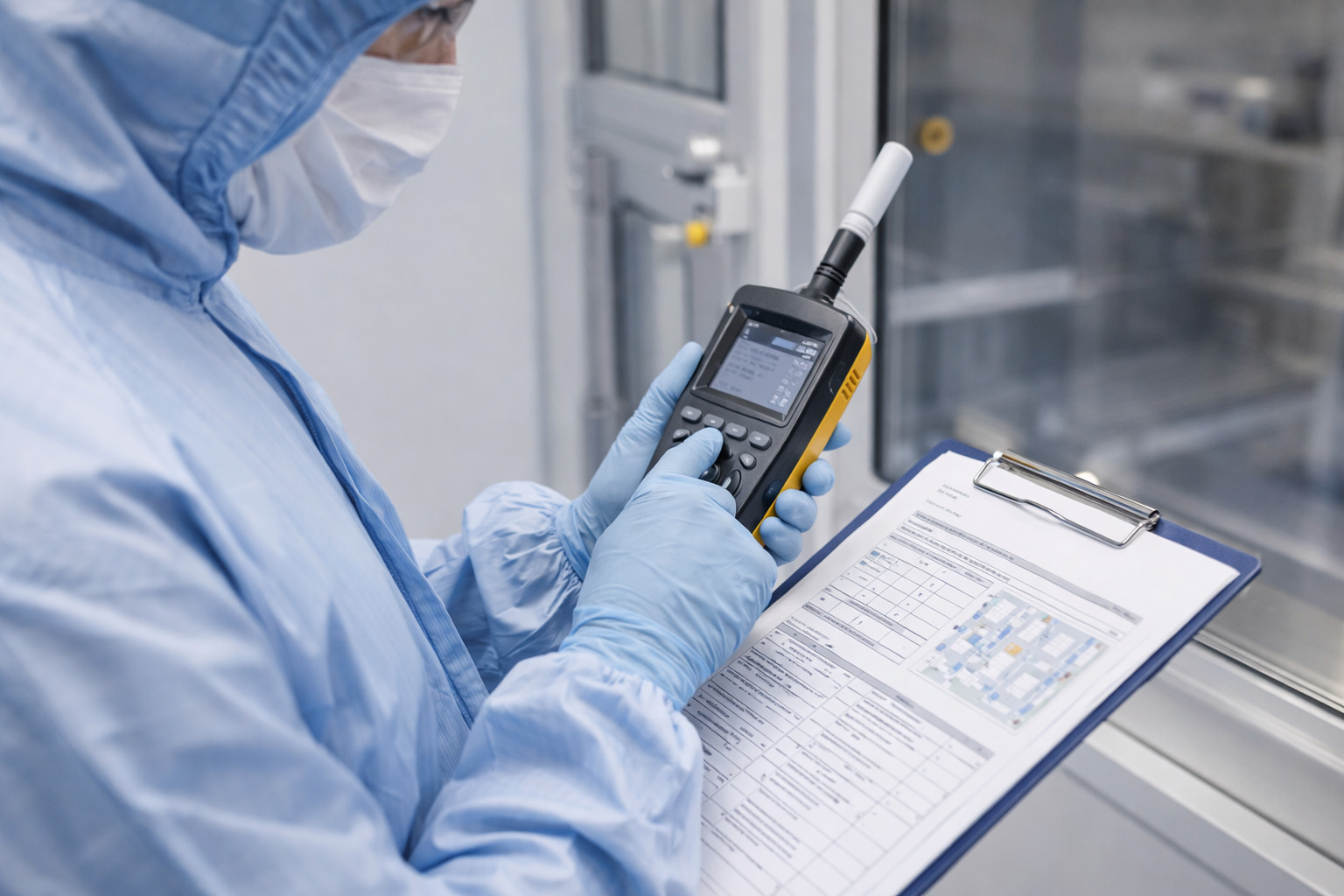
Have you ever wondered how pharmaceutical or cosmetic products reach the market with maximum safety and quality? The answer lies in GMP regulations in white rooms. GMP stands for Good Manufacturing Practices and is the pillar that ensures products are manufactured under controlled conditions, free of contamination, and to the highest quality standards.
In this article we explain what GMP regulations are, why they’re so important in white rooms, and how to apply them correctly in your company to guarantee product safety.
What are GMP regulations?
GMP regulations govern the good manufacturing practices that must be followed in critical sectors such as pharmaceutical, biotechnological, cosmetic, food and healthcare.
Their main goal is to ensure that manufactured products are safe, effective and of consistent quality, regardless of batch or production time. In other words, it’s the guarantee that a product always meets the same standards, from start to finish.
Importance of GMP regulations in white rooms
White rooms are spaces where the principles of GMP regulations are strictly applied. This is no coincidence, since compliance translates into direct benefits for your business:
- Product safety: Protects your products from cross-contamination and environmental risks, which is vital in sectors such as medicines or food.
- Legal compliance: It’s a mandatory requirement in regulated sectors. Failing to comply can lead to penalties, production shutdowns, or even business closure.
- Market trust: Holding GMP certification conveys credibility to clients, suppliers and regulatory bodies, positioning you as a reliable partner.
- Risk prevention: Helps minimize the possibility of errors that could compromise the quality of your products.
Key requirements of GMP regulations in white rooms
To comply with GMP regulations in white rooms, measures must be applied covering everything from facility design to document management:
- Proper design and construction: Finishes must be smooth and easy to clean. Materials such as stainless steel or phenolic resin should be used to prevent contaminant buildup.
- Environmental control: HVAC systems must regulate temperature, humidity and pressure to guarantee a stable environment.
- Advanced filtration: The use of HEPA and ULPA filters is essential to ensure the room’s air is particle-free.
- Cleaning and maintenance protocols: You must have defined, documented cleaning plans that are rigorously followed.
- Access control and staff training: Only authorized, properly trained personnel may enter the room. Ongoing training is a fundamental pillar.
- Validation and documentation: Every process and piece of equipment must be validated and recorded to ensure traceability. Documentation is your best evidence in an audit.
Differences between GMP, ISO 14644 and FDA
Although often mentioned together, these regulations have different focuses and complement one another:
- GMP: focuses on good manufacturing practices (processes, controls and records).
- ISO 14644: establishes the technical classification of white rooms according to airborne particle levels.
- FDA: the US regulatory body overseeing the production of medicines, medical devices and food.
Ideally, a white room should comply with all of them, as they complement each other to guarantee maximum safety and quality — especially if your business has international reach.
GMP certification in Spain
In Spain, the Spanish Agency of Medicines and Medical Devices (AEMPS) is the body responsible for granting GMP certification to companies that meet the requirements.
The process includes:
- Initial audit of facilities and procedures.
- Verification of proper application of good practices.
- Issuance of the GMP certificate if the required standards are met.
Holding this certification is a mandatory requirement for companies manufacturing medicines and healthcare products, and a major competitive advantage in other sectors.
Frequently asked questions about GMP regulations in white rooms
It is the set of good manufacturing practices that guarantee products are made in controlled, safe environments with consistent quality.
Yes, it’s mandatory in sectors such as pharmaceutical and healthcare, and highly recommended in others to ensure quality and compliance.
White rooms are the environment where GMP is applied, as they allow control of contamination, air and environmental conditions.
HVAC systems, HEPA/ULPA filtration, pressure control, cleaning protocols, and documented validation of all processes are required.
GMP regulations in white rooms are an essential pillar for ensuring production processes take place under the strictest conditions of quality, hygiene and safety. It’s not just about complying with the law, but about guaranteeing reliable products, earning market trust, and positioning yourself as a benchmark in highly regulated sectors.
If your company needs to design, adapt or certify a white room under GMP regulations, at ISL Salas Limpias we support you throughout the process to help you meet the sector’s most demanding standards.