
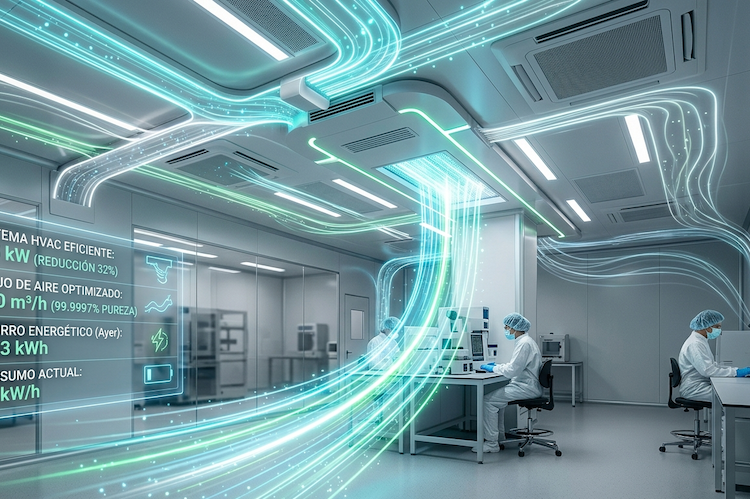
The high demand for filtered air makes cleanrooms major energy consumers, with HVAC responsible for 60%-80% of total expenditure. That’s why energy efficiency in cleanrooms is not optional, but a critical strategy that helps reduce operating costs and increase sustainability.
In this article we’ll look at how to optimize energy resources through design strategies, electricity and lighting, equipment and maintenance.
Why cleanrooms consume so much energy
The high energy consumption is due to the need to maintain constant, controlled environmental conditions 24 hours a day.
Key factors include:
- Very high air changes (up to 600 times per hour in ISO 5).
- Continuous use of HEPA or ULPA filters with high resistance to flow.
- Temperature and humidity control within very narrow margins.
- Active differential pressure systems.
- Permanent lighting and monitoring equipment.
All of this implies high demand for ventilation, air conditioning and filtration, which makes energy efficiency a key challenge for modern cleanroom engineering.
7 key strategies for energy optimization (HVAC and design)
1. Smart HVAC system design
The HVAC system is the main driver of energy consumption, so its design should prioritize:
- Partial air recirculation, rather than 100% outside air supply.
- Variable air volume control (VAV) based on thermal load or occupancy.
- Use of fans with variable frequency drives (VFD).
- Heat recovery through exchangers or air coils.
- Continuous monitoring systems that automatically adjust flow, pressure and temperature parameters.
Well-planned HVAC engineering can reduce consumption by up to 30% without compromising the ISO cleanliness class.
2. Selection of efficient filters
The type and location of HEPA or ULPA filters also affect energy consumption. Filters with low initial pressure drop allow airflow to be maintained with less fan pressure.
In addition:
- Replacing filters at the right time (not before or after) optimizes performance.
- Good pre-filtering reduces early saturation of HEPA filters.
- Cleaning ducts and diffusers prevents flow losses.
Proper filtration system management can save up to 10% of annual energy consumption.
3. Zones with differentiated pressures and dynamic control
Designing the room with pressure zones adapted to the criticality of the process allows the use of clean air to be limited only where necessary.
For example:
- ISO 5 – critical zones with laminar flow.
- ISO 7–8 – service or circulation areas with fewer air changes per hour.
The use of smart pressure and flow sensors allows air supply to be automatically adjusted based on occupancy or operating mode (production, cleaning or standby).
4. Lighting and equipment control
While HVAC is the main consumer, other systems can also be optimized:
- LED lighting with automatic occupancy control or dimmable intensity.
- High-efficiency electric motors (IE3 or IE4).
- Electrical equipment in controlled standby when not in use.
Small measures in these systems can result in savings of 5–10% of total consumption.
5. Thermal insulation and airtightness
An energy-efficient cleanroom must be airtight and well insulated. Any air leak or thermal bridge forces the HVAC system to compensate, increasing consumption.
Recommended measures include:
- Sandwich panels with insulating core (rock wool or polyurethane).
- Joints sealed with neutral silicone or sanitary polyurethane.
- Double-glazed windows flush with the panel.
- Airtight doors with automatic closing.
In addition, proper insulation prevents condensation and maintains thermal stability in all zones.
6. Preventive maintenance and calibration
Preventive maintenance is one of the most effective strategies for reducing energy consumption:
- Regular cleaning of filters and grilles.
- Calibration of temperature and pressure sensors.
- Duct leak detection.
- Checking the condition of fans and motors.
An HVAC system without maintenance can increase energy consumption by more than 20%. That’s why including predictive maintenance and remote monitoring improves both the system’s efficiency and reliability.
7. Sustainable design from the project phase
Energy efficiency must be planned from the initial design of the project, not only during the operational phase.
Some sustainable design strategies include:
- CFD (Computational Fluid Dynamics) simulations to optimize airflow.
- Selection of materials with low thermal conductivity.
- Integration of renewable energy systems (solar panels or geothermal).
- Assessment of equipment’s energy life cycle.
In new installations, these measures can reduce overall consumption by up to 40% compared to conventional systems.
Benefits of an energy-efficient cleanroom
- Reduced long-term operating costs.
- Compliance with sustainability and environmental goals.
- Longer lifespan for equipment and components.
- Improved thermal comfort and process stability.
- Easier environmental certifications (LEED, ISO 50001, BREEAM).
- Strengthened corporate image as a company committed to efficiency and innovation.
A poorly optimized cleanroom can consume up to 80% more energy than necessary.
Energy efficiency in cleanrooms is not just a trend, but a technical and economic necessity.
Through smart design, controlled operation and continuous maintenance, it is possible to significantly reduce consumption without compromising air quality or regulatory compliance.
At ISL Salas Limpias, we develop HVAC solutions and sustainable engineering that optimize the energy performance of cleanrooms, combining technology, efficiency and ISO 14644 compliance.
Contact us for advice on how to improve energy efficiency in your cleanroom.