
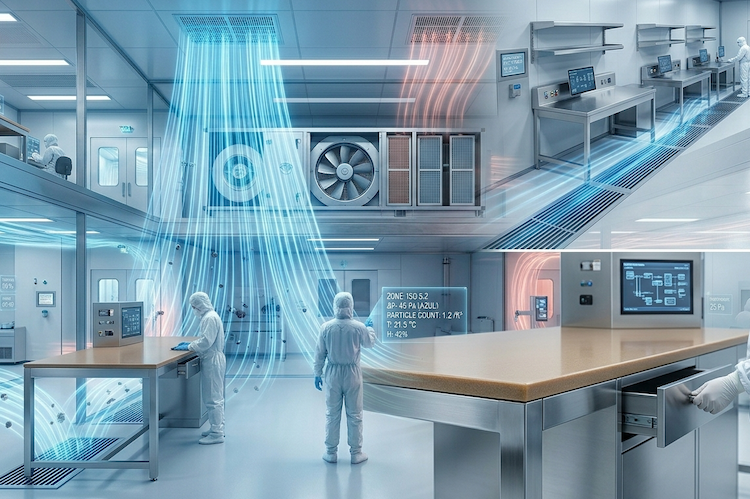
Furniture for cleanrooms is not simply equipment; it is a critical extension of the controlled environment’s hygienic design. Its function is fundamental: it must ensure that cleanliness and sterility conditions are maintained without compromising safety or work efficiency.
Let’s look at what materials are used in furniture for cleanrooms, what requirements they must meet, and how efficient design contributes to compliance with ISO 14644 and GMP standards.
The importance of furniture in a cleanroom
In a cleanroom, every surface and object can become a potential source of particles. That’s why furniture must not only be functional, but also easy to clean, durable and compatible with decontamination protocols.
Poor design can lead to dust buildup, hinder cleaning or disrupt laminar airflow. On the other hand, well-designed furniture helps to:
- Maintain the airtightness of the environment.
- Reduce particle generation.
- Facilitate cleaning and disinfection.
- Optimize workspace and staff flow.
Applicable regulations
Furniture and materials used must meet the requirements of:
- ISO 14644-4: cleanroom design and construction.
- GMP (Good Manufacturing Practices): good manufacturing practices in the pharmaceutical and healthcare industry.
- FDA 21 CFR Part 211: specifications for pharmaceutical production equipment and facilities.
These standards establish that furniture must be inert, non-absorbent, smooth, non-corrosive and easy to clean.
Materials: chemical resistance and zero particles
Material selection is key to ensuring durability and cleanliness in furniture for cleanrooms. The most commonly used are:
1. Stainless steel The most common material due to its corrosion resistance, durability and ease of cleaning.
- Does not shed particles or degrade with aggressive disinfectants.
- Ideal for workbenches, shelving, benches and cabinets.
- Satin or polished finishes prevent particle and microorganism adhesion.
2. Phenolic resin A compact, waterproof material resistant to chemical agents.
- Widely used in countertops, cabinets and modular furniture.
- Withstands high temperatures and prevents bacterial growth.
- An excellent alternative to steel in areas where lightness and lower thermal conductivity are desired.
3. Polypropylene (PP) An antistatic, non-porous plastic material.
- Recommended for auxiliary furniture or wet areas.
- Allows for modular, lightweight and easily replaceable designs.
4. Tempered glass and sanitary laminate
- Used in display cases or partitions where visibility is required without compromising airtightness.
- Resistant to chemical products and scratching.
5. HPL (High Pressure Laminate)
- Continuous surfaces, free of joints or pores.
- High resistance to wear, chemical products and impacts.
- Used in cladding or low-risk auxiliary furniture.
Efficient, ergonomic design
The design of furniture for cleanrooms should follow criteria that optimize both hygiene and work efficiency.
Essential features:
- Smooth surfaces with no visible joints.
- Rounded corners, which prevent dust buildup.
- Raised structures or sealed baseboards, to facilitate floor cleaning.
- Modular design, adaptable to each zone’s needs.
- Antistatic materials, which reduce particle attraction.
- Compatibility with laminar flow, avoiding obstructions in air circulation.
In addition, furniture must be ergonomic to allow safe handling and reduce the risk of contact contamination.
Examples of common furniture in cleanrooms
- Stainless steel or phenolic resin workbenches.
- Sealed modular cabinets and shelving.
- Ergonomic chairs with antistatic vinyl upholstery.
- Pass-through benches in airlocks or gowning areas.
- Stainless steel transport carts and mobile stands.
- Furniture with antistatic wheels and safety brakes.
- Material transfer airlocks integrated into the furniture.
Each item should be selected based on the ISO zone, the type of process and cleaning frequency.
Buying guide: critical factors in choosing furniture
- Required cleanliness level (ISO class): the stricter the classification, the more demanding the design must be.
- Chemical compatibility: furniture must withstand the cleaning products used.
- Durability and maintenance: materials must maintain their integrity over years of continuous use.
- Custom design: each room requires a specific configuration based on its workflow.
Supplier certification: manufacturers must demonstrate compliance with ISO and GMP regulations.
Maintenance of furniture in cleanrooms
Furniture must be included in the room’s cleaning and preventive maintenance plan. This involves:
- Daily cleaning with neutral or certified disinfectant products.
- Checking the condition of joints, baseboards and sealants.
- Immediate replacement of damaged or corroded elements.
- Monitoring wear on work surfaces.
Proper maintenance extends the furniture’s lifespan and maintains the installation’s ISO classification.
Poorly designed furniture can compromise cleanliness, disrupt airflow and put the room’s certification at risk.
Furniture for cleanrooms plays a key role in the functionality and safety of the environment. Its design, materials and maintenance determine the level of cleanliness achieved and the space’s regulatory compliance.
At ISL Salas Limpias, we manufacture and install technical furniture for cleanrooms in stainless steel and phenolic resin, combining durability, ergonomics and hygienic design.
Contact us for advice on furniture and equipment adapted to your cleanroom project.